
PDC CAMPUS LANDSCAPE REDESIGN | CREATING A LIVING WORK OF ART
Pacific Design Center is thrilled to unveil a closer look at our campus landscape refresh with award-winning landscape designer Jessica Viola of Viola Gardens. In this interview, Jessica shares her creative process, inspiration, and approach to reimagining the grounds with sustainable materials and lush, California-native plantings. Her design celebrates nature’s beauty while enhancing the experience for everyone who visits PDC. We’re excited to see her vision come to life and can’t wait to welcome our community into these renewed outdoor spaces.
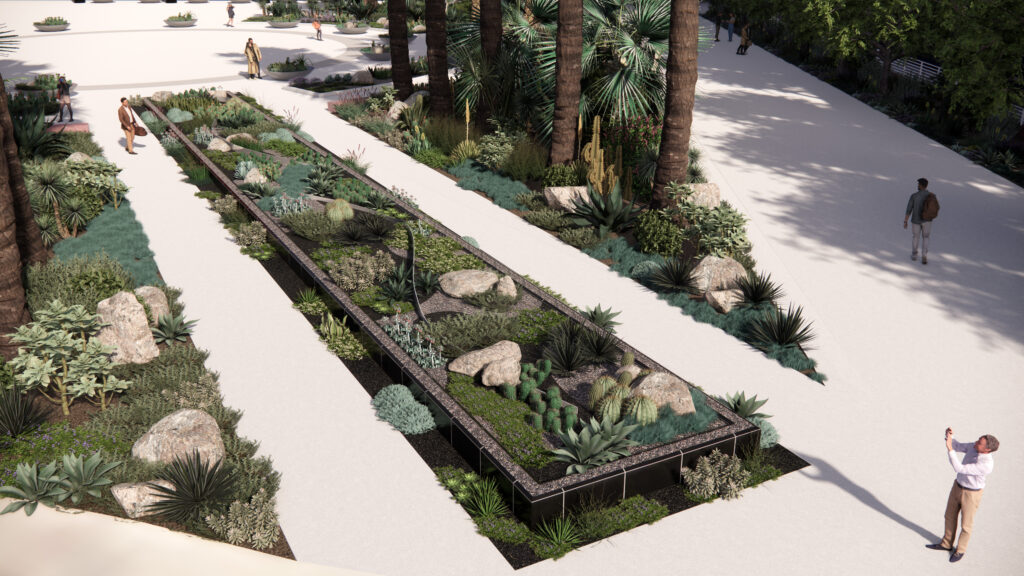


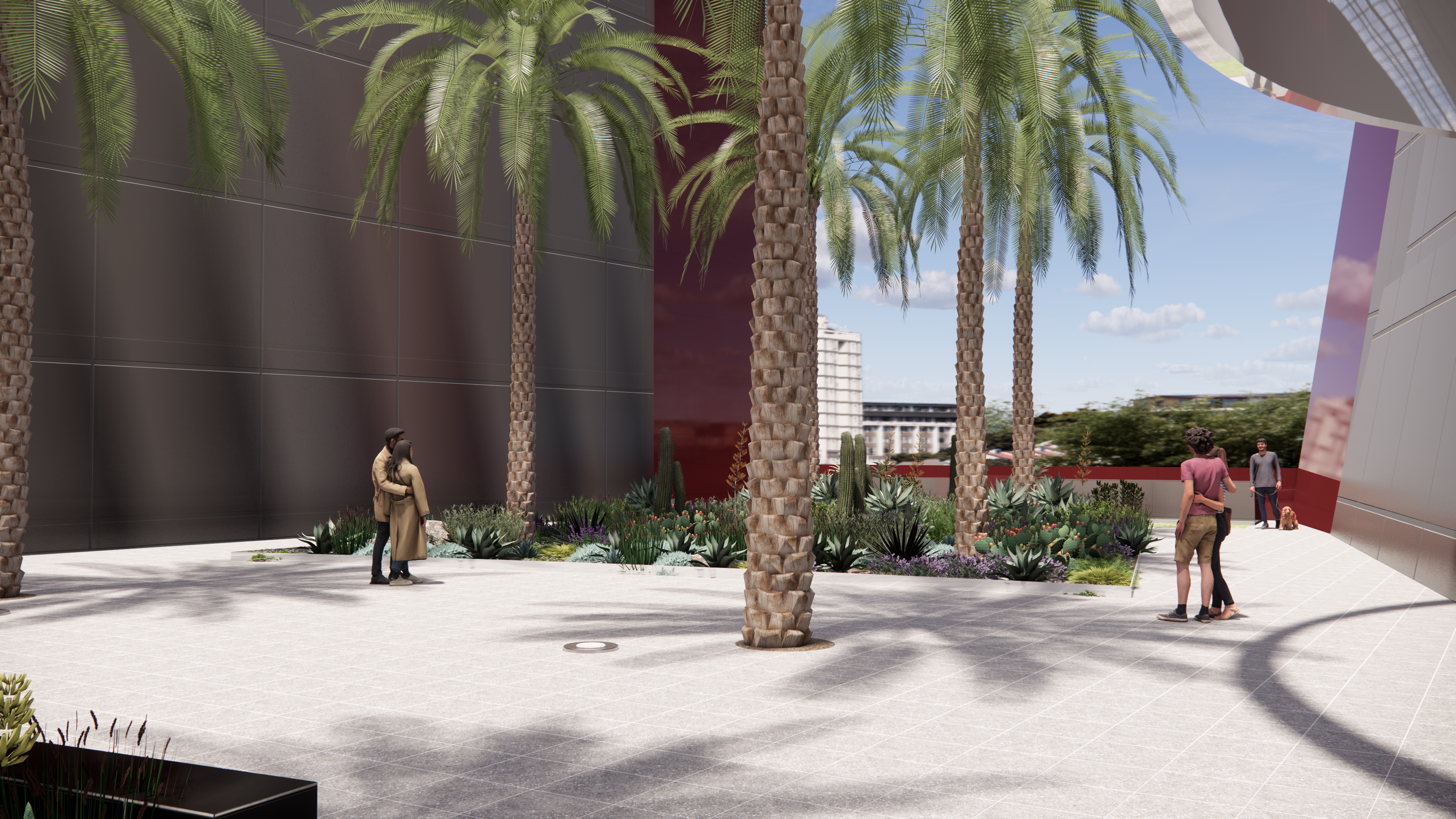
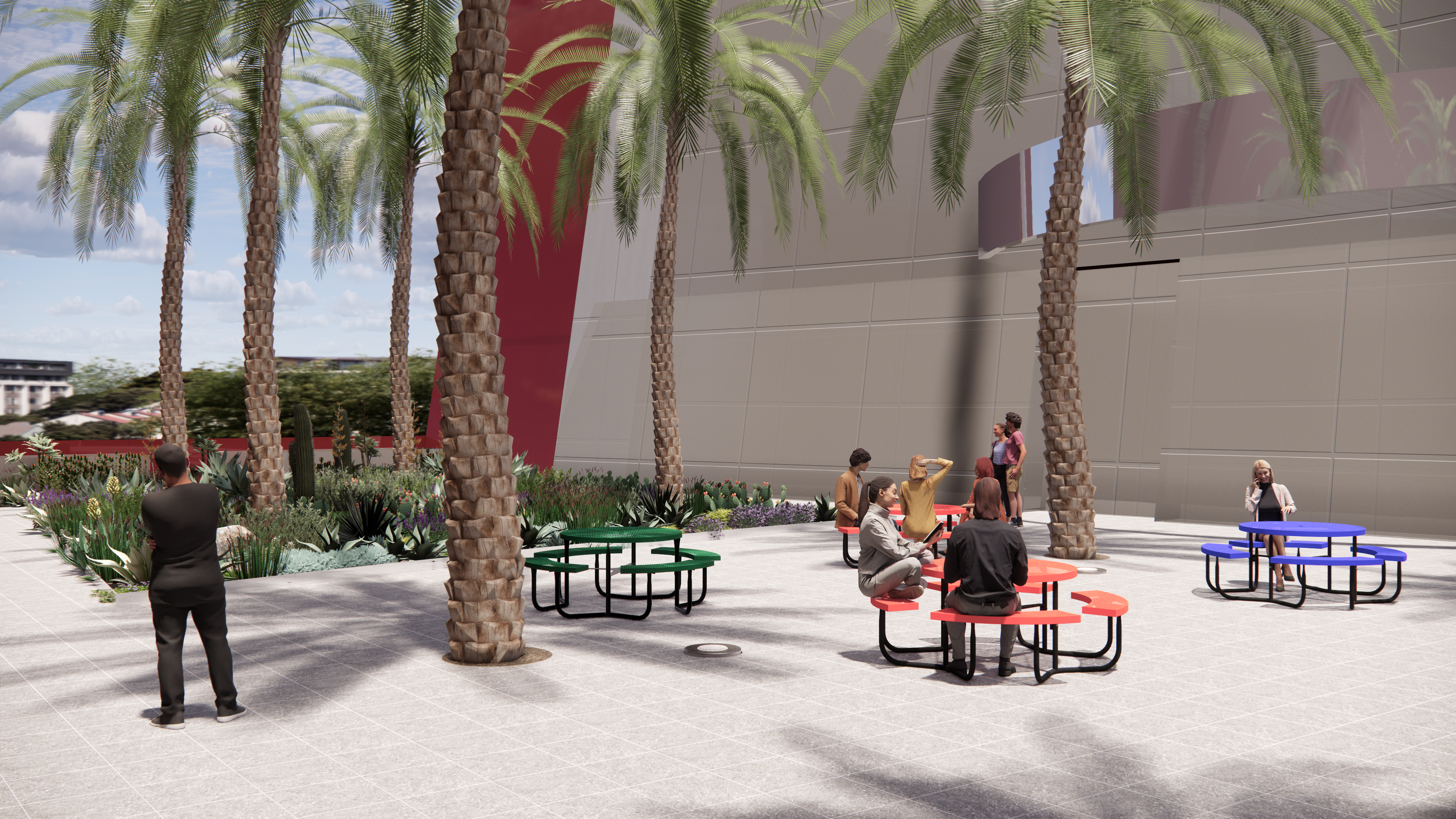
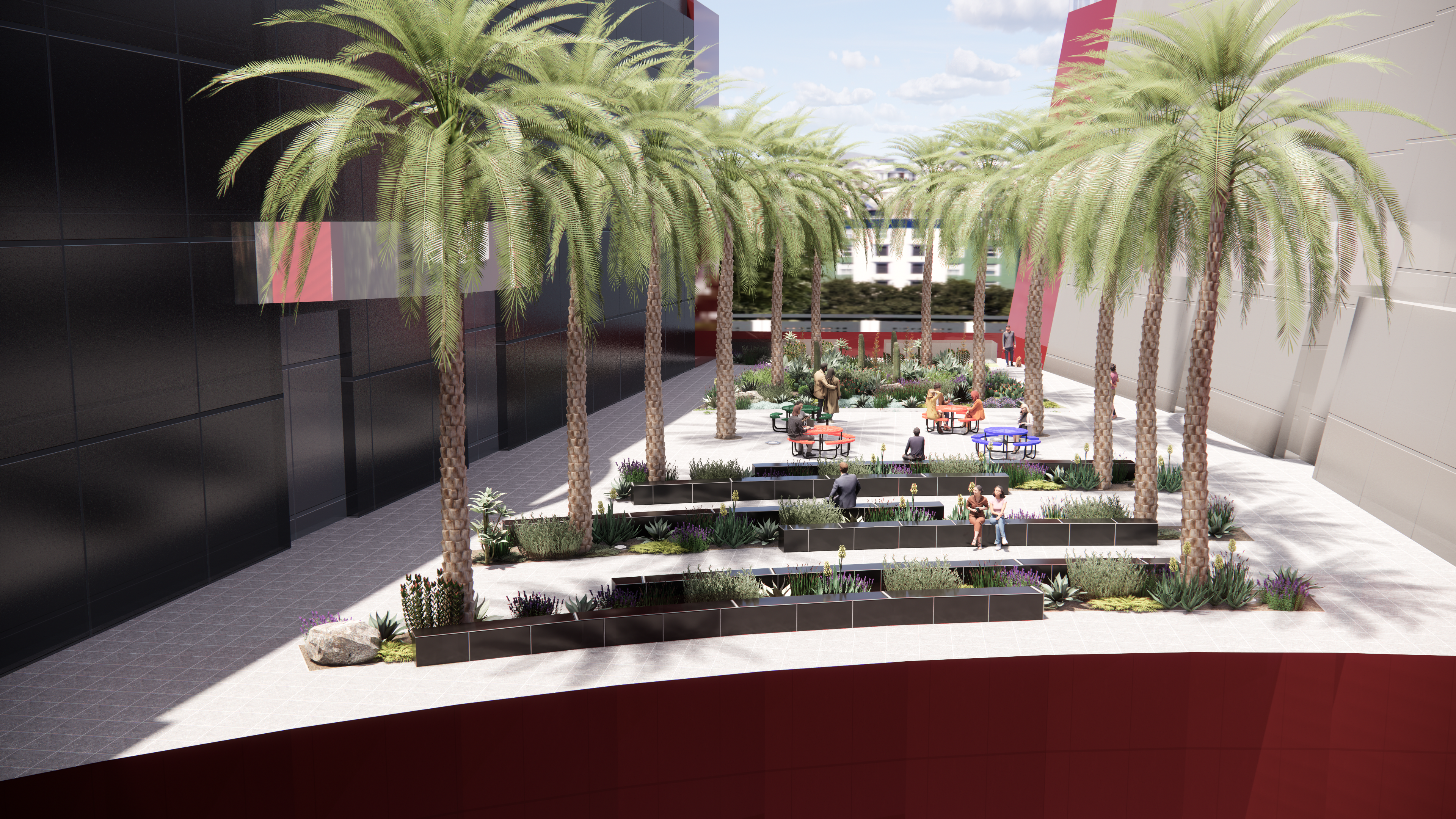
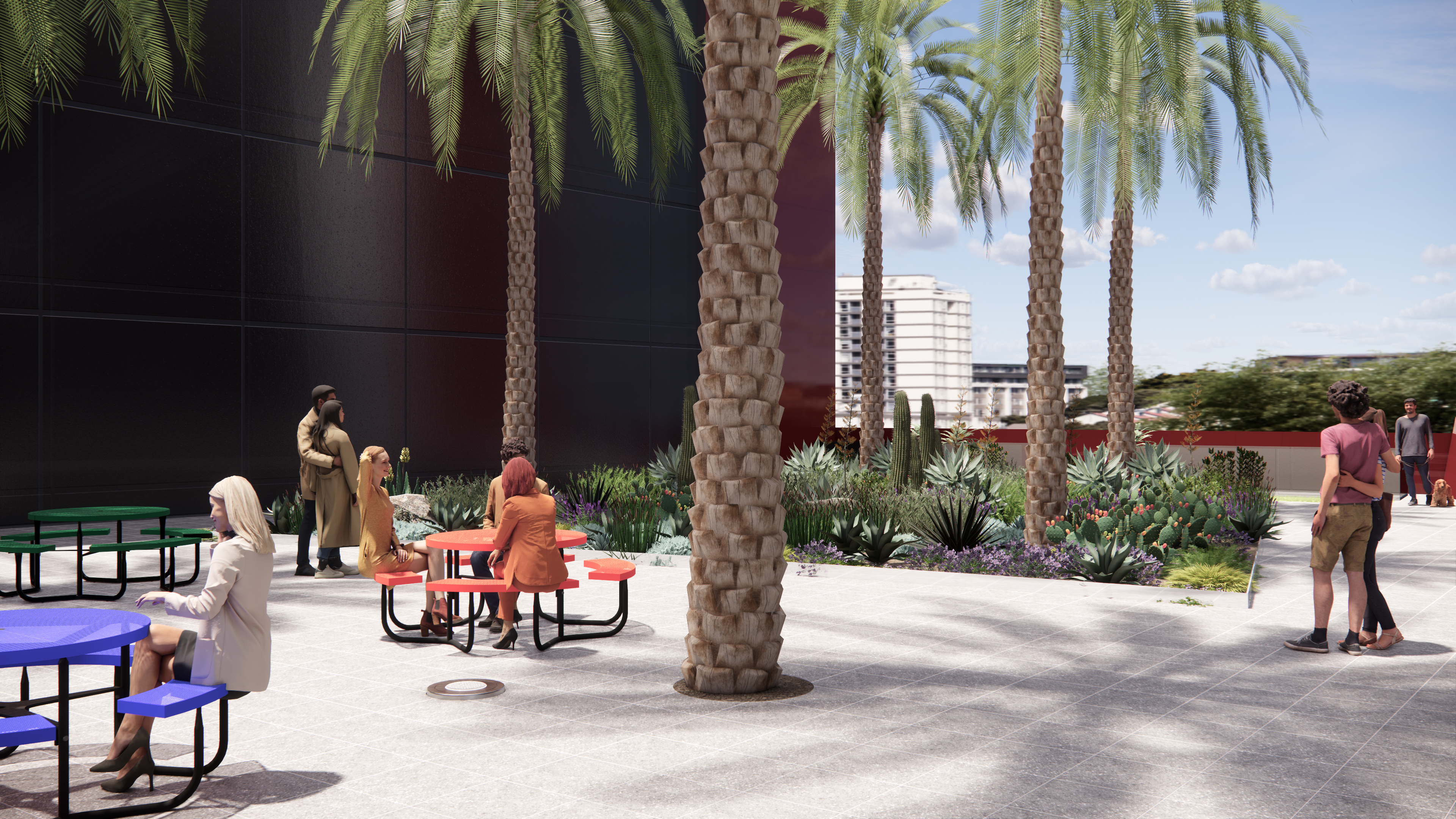
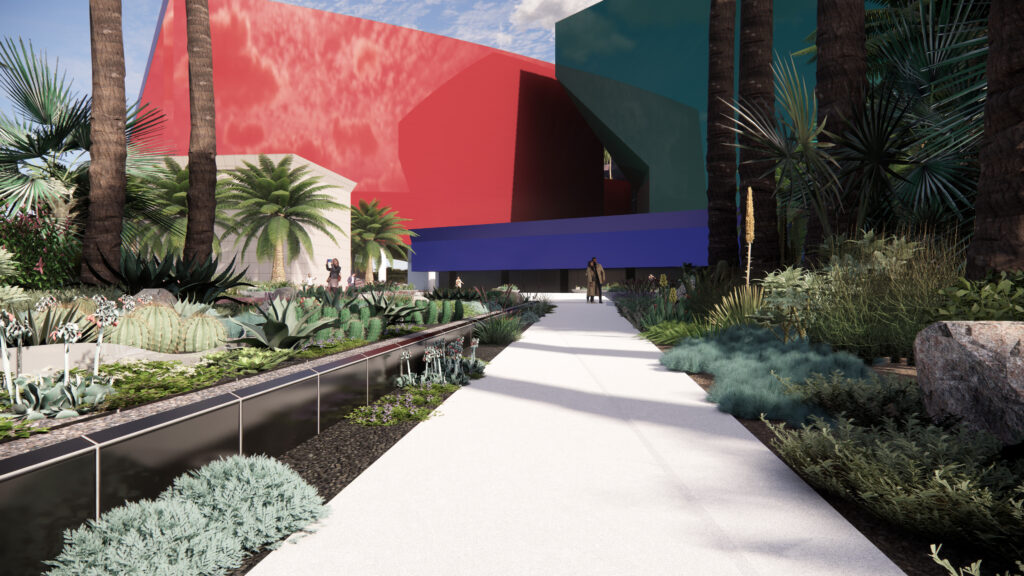
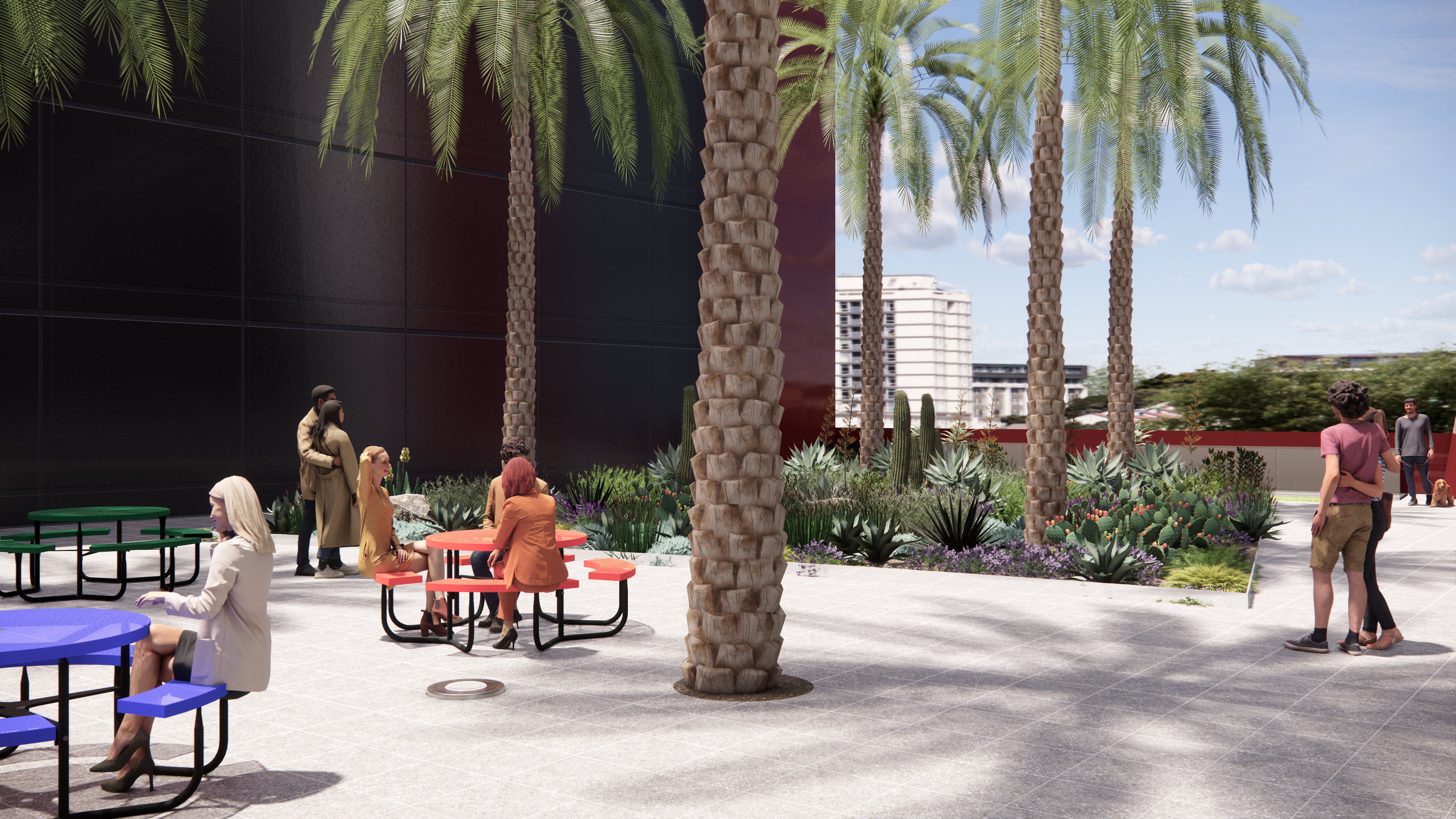
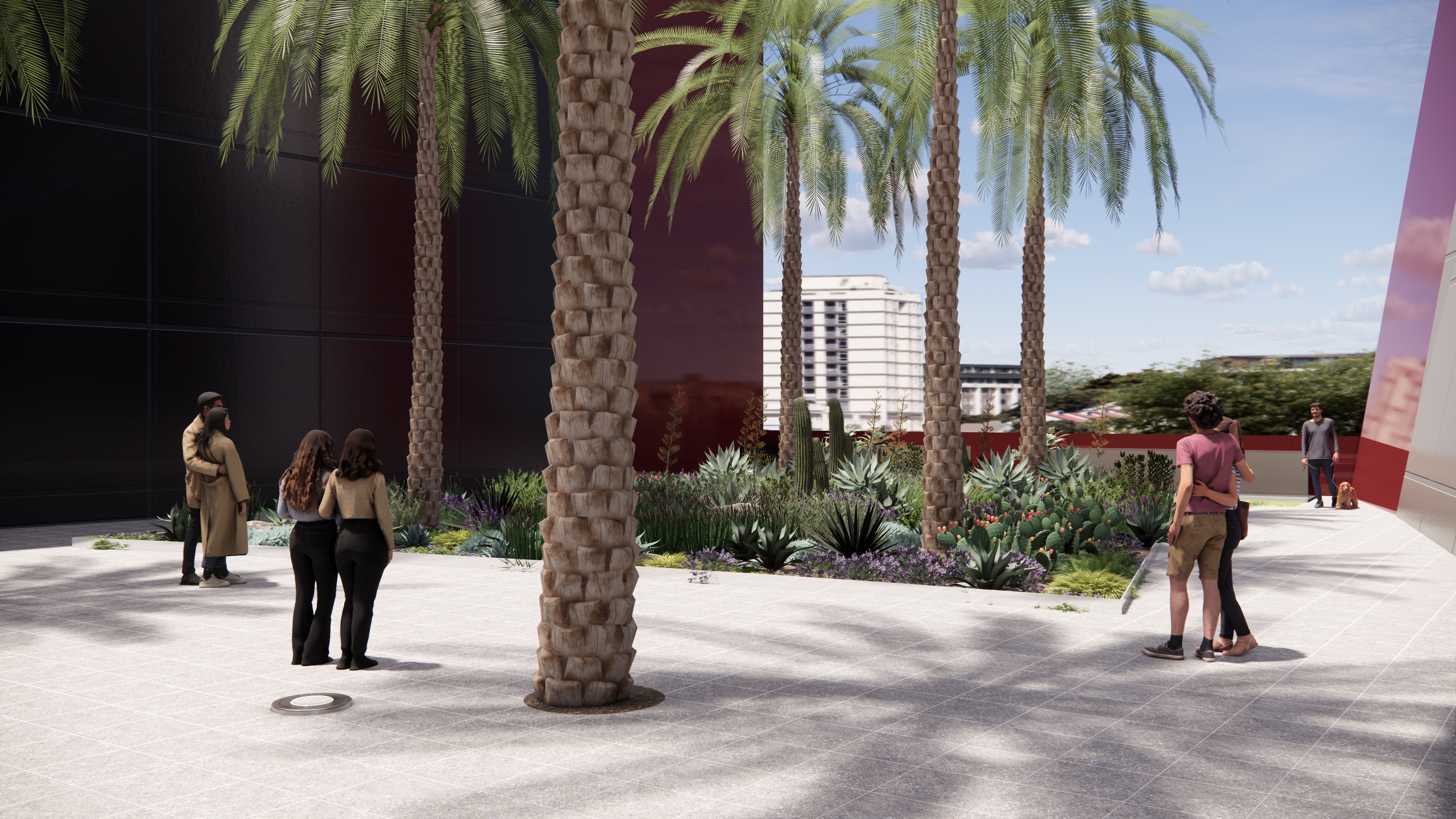
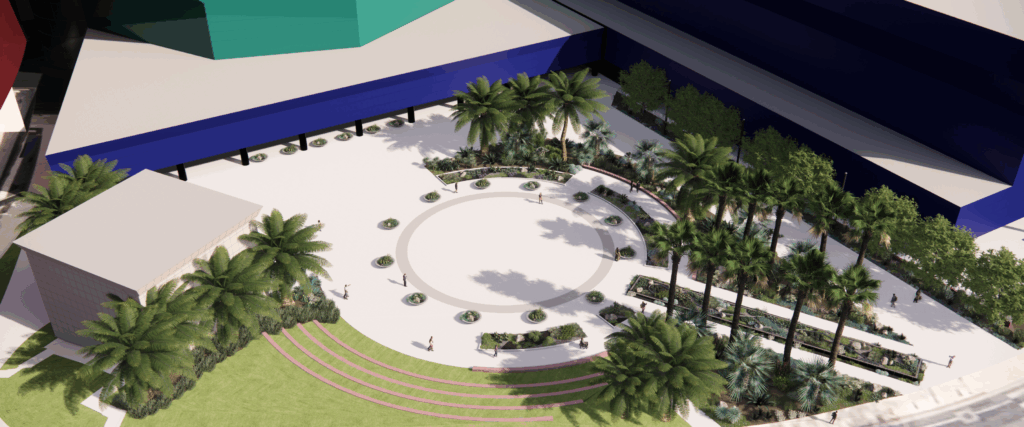
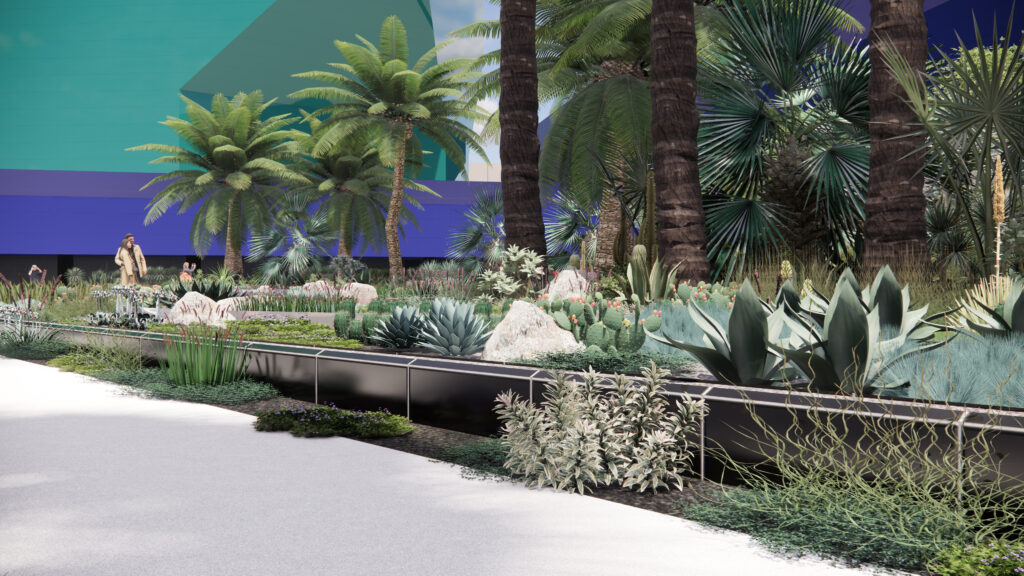
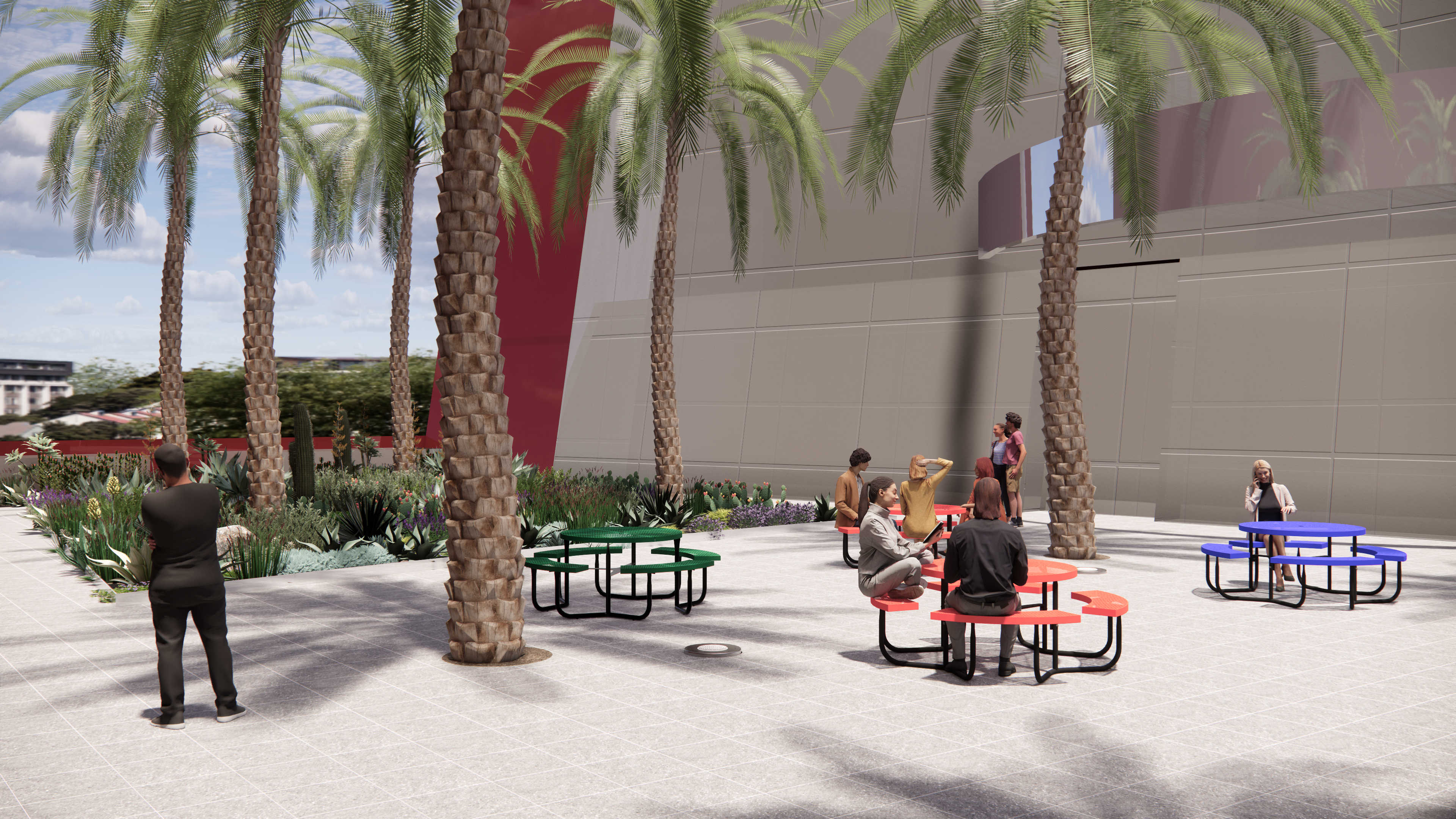

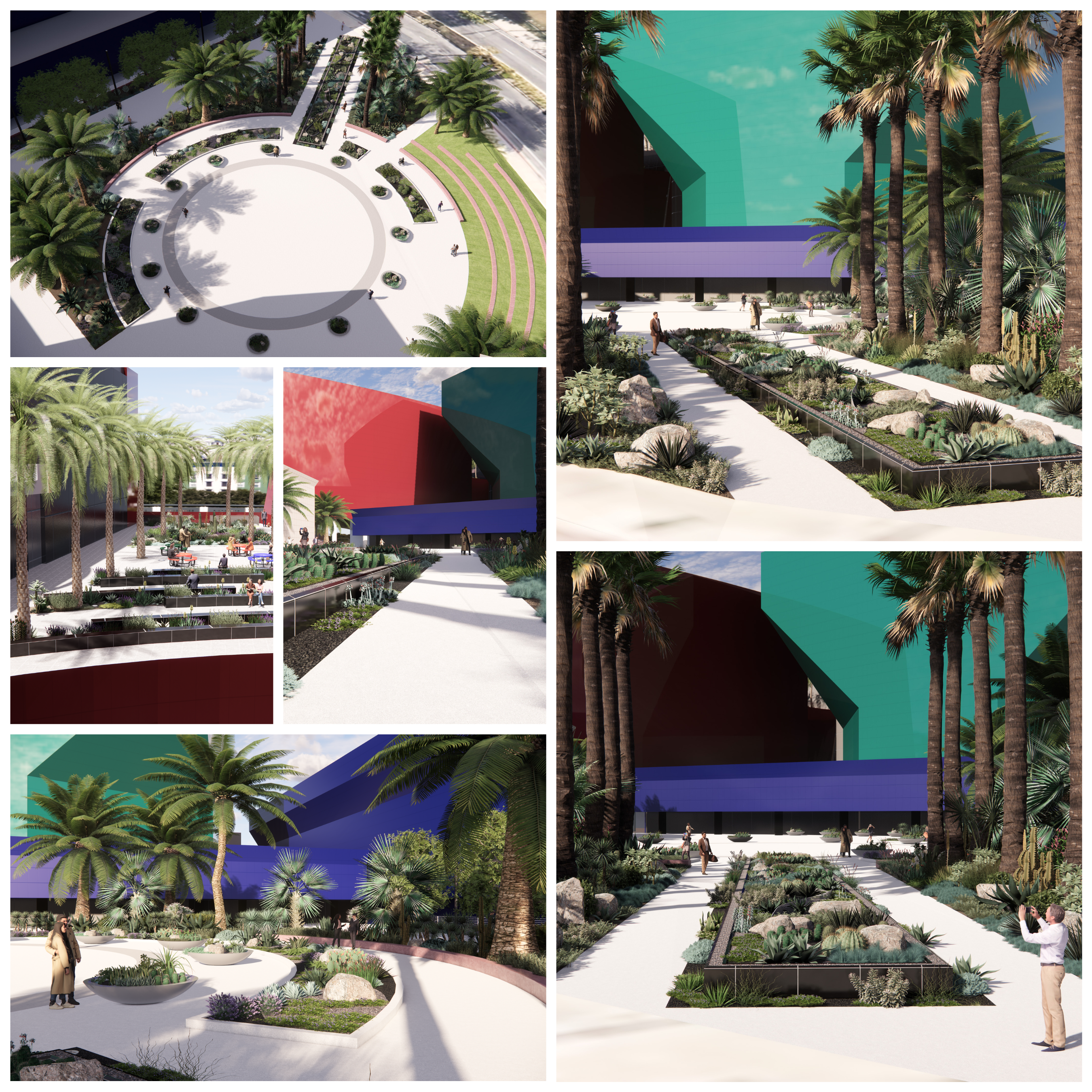

My vision for the landscape at the Pacific Design Center was to create an immersive, living work of art — one that feels both curated and wild, bold yet refined. I wanted it to be compelling on a sensory level: full of texture, color, movement, and light — a composition made entirely of plants.
At its core, the intention was to demonstrate how ecological design can be both beautiful and functional. The landscape needed to be drought-tolerant, regenerative, low-maintenance, and pollinator-friendly — supporting hummingbirds, butterflies, and other beneficial species — while also accommodating the urban context and the ongoing flow of public events. No heavy hardscape, but rather a dynamic tapestry of plant material: layered, biodiverse, and ever-evolving. I envisioned a place that could serve multiple purposes: as an aesthetic experience, as a functional public space, and ultimately as an educational botanical garden.
Over time, the idea is to incorporate interpretive elements — like QR codes or audio tours — that highlight the plants’ ecological roles, their beauty, and their relevance in a Southern California climate. It’s about designing for resilience and wonder — offering an invitation for people to connect with nature, even in the heart of the city.
Function and need drive design — they shape the foundation of every creative decision. At the Pacific Design Center, we envisioned a landscape that would invite public experience and daily use, while also offering respite, reflection, and regeneration. We approached the site as an opportunity to create a kind of urban botanical garden — a curated, living installation of color, texture, and ecological intelligence. For tenants and visitors, we wanted to offer not just shade and softness, but something emotionally resonant. Spaces to linger, connect, or simply breathe.
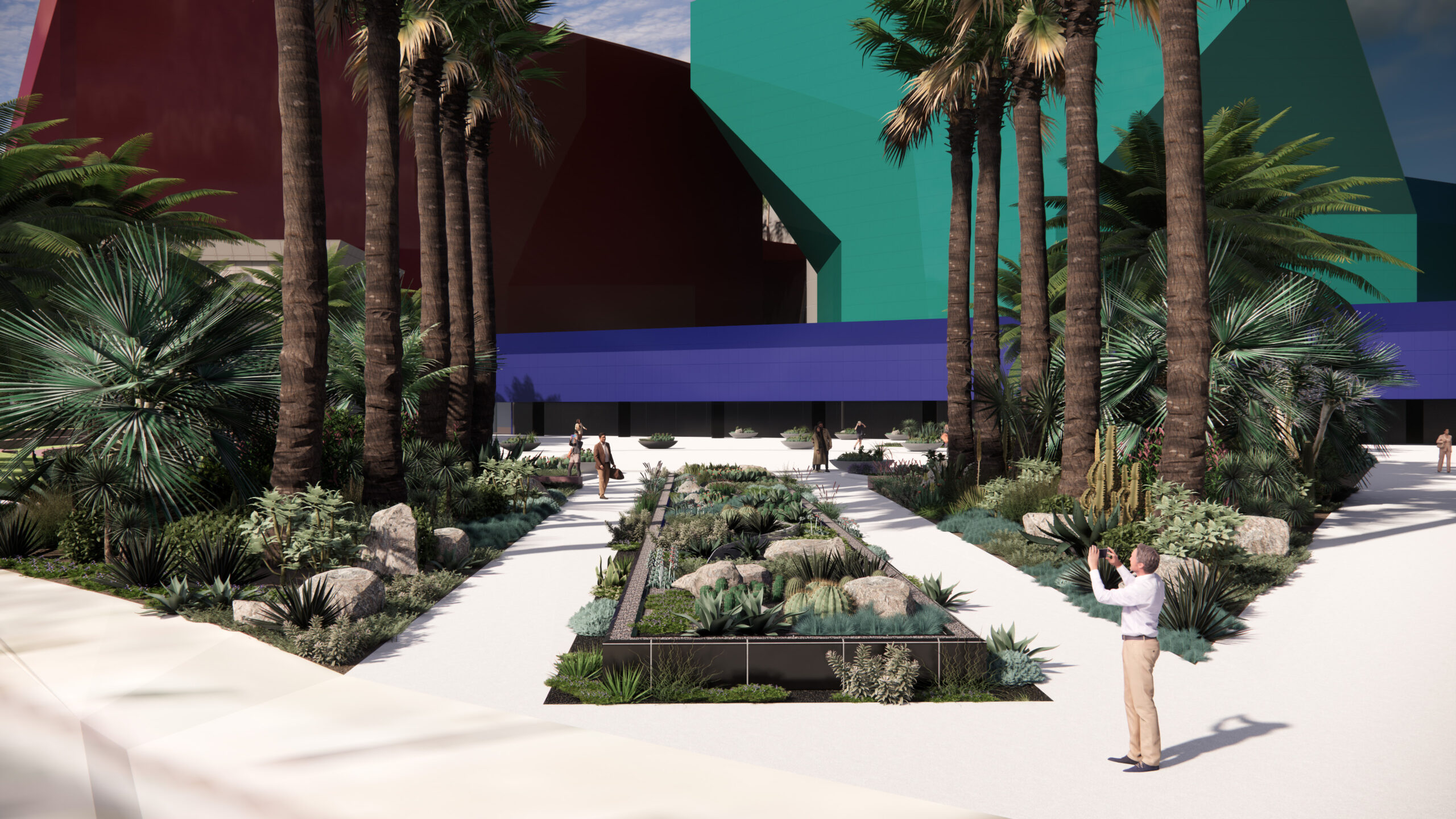
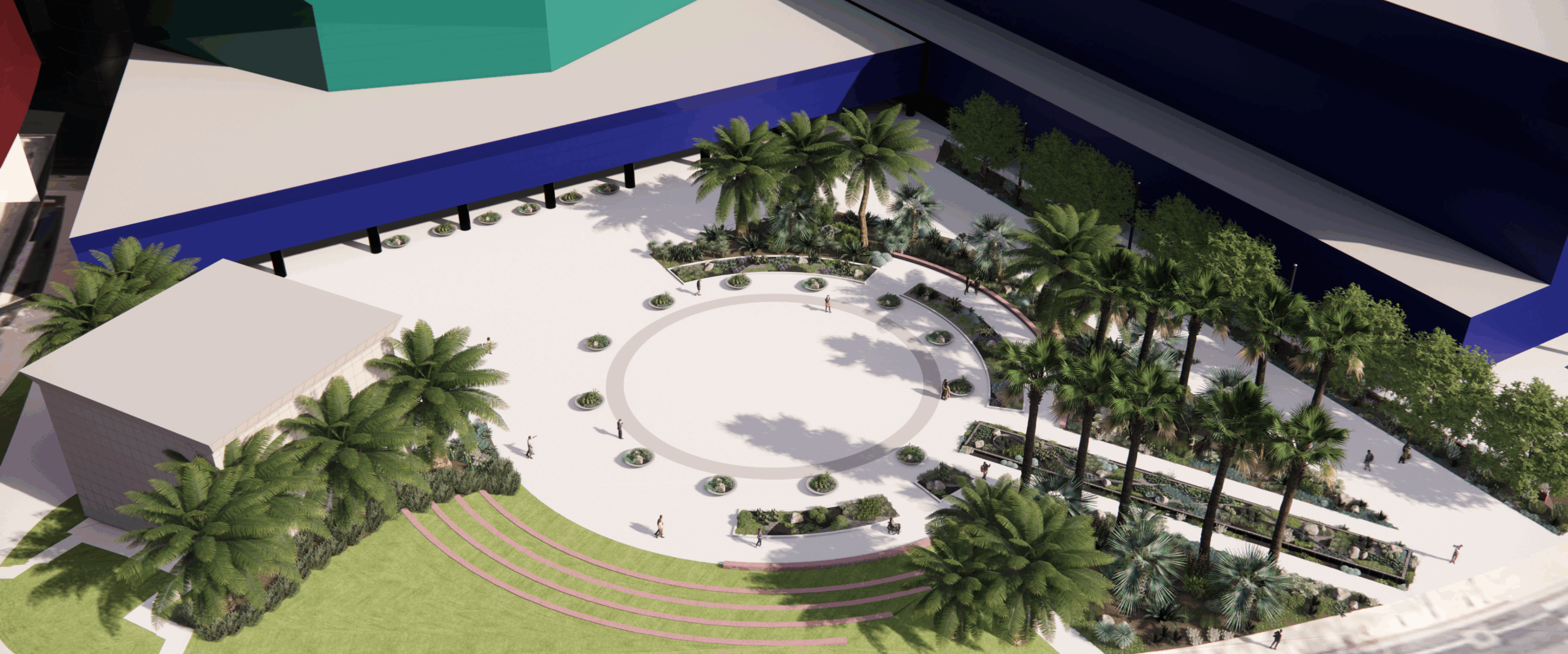
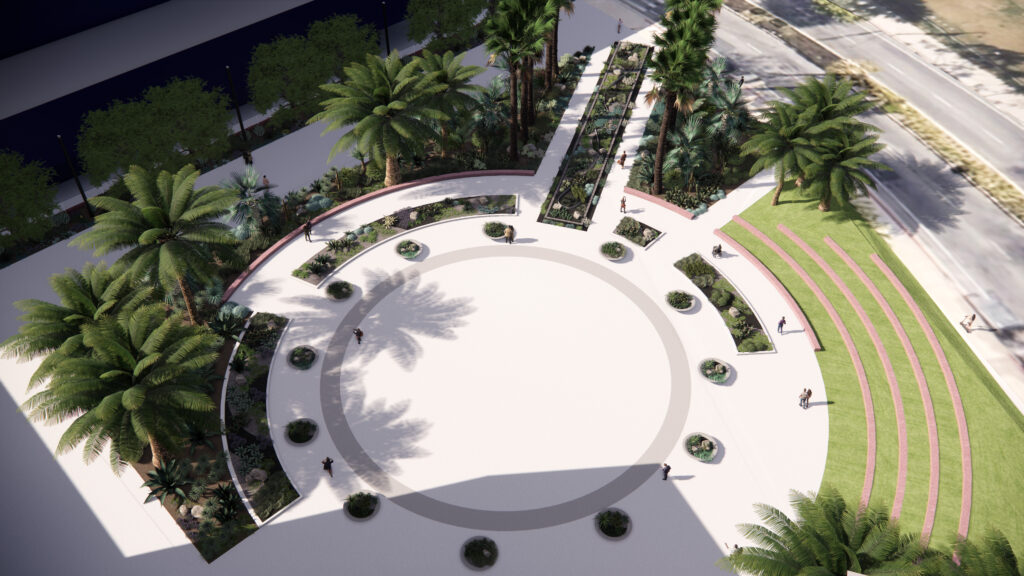
The central fountain, for example, is being transformed into a living planter — a sculptural and ecological centerpiece. In place of water features that are resource-heavy, we’re using native and drought-tolerant plants, drawing the eye through contrast and form. The layout supports temporary installations like stages and tents, while the plantings remain low enough to preserve visibility and accessibility. It’s a space that adapts. Because this is a public plaza, we intentionally avoided materials that could be hazardous or misused (like loose gravel or sharp boulders), and instead focused on subtle artistry — variations in tone and shape that evolve over time. We’ve selected species that are resilient, pollinator-friendly, and responsive to Southern California’s changing climate. Each specimen was chosen with care: to support biodiversity, require minimal maintenance, and reflect an ethos of regenerative design. Beauty alone is not enough. It must be matched by purpose.
In our work, we hold the belief that designs must serve real needs — they must be functional, responsive, and enduring — while also uplifting the human spirit through beauty, form, and feeling. At the Pacific Design Center, we’ve aimed to embody both: a landscape that functions for daily use, events, and ecological resilience — and a space that offers wonder, inspiration, and the subtle poetry of living systems. Where plants are not just decorative, but expressive — rooted in ecological intelligence and layered meaning. In this way, function becomes beautiful. And beauty, when rooted in care and purpose, becomes even more powerful.
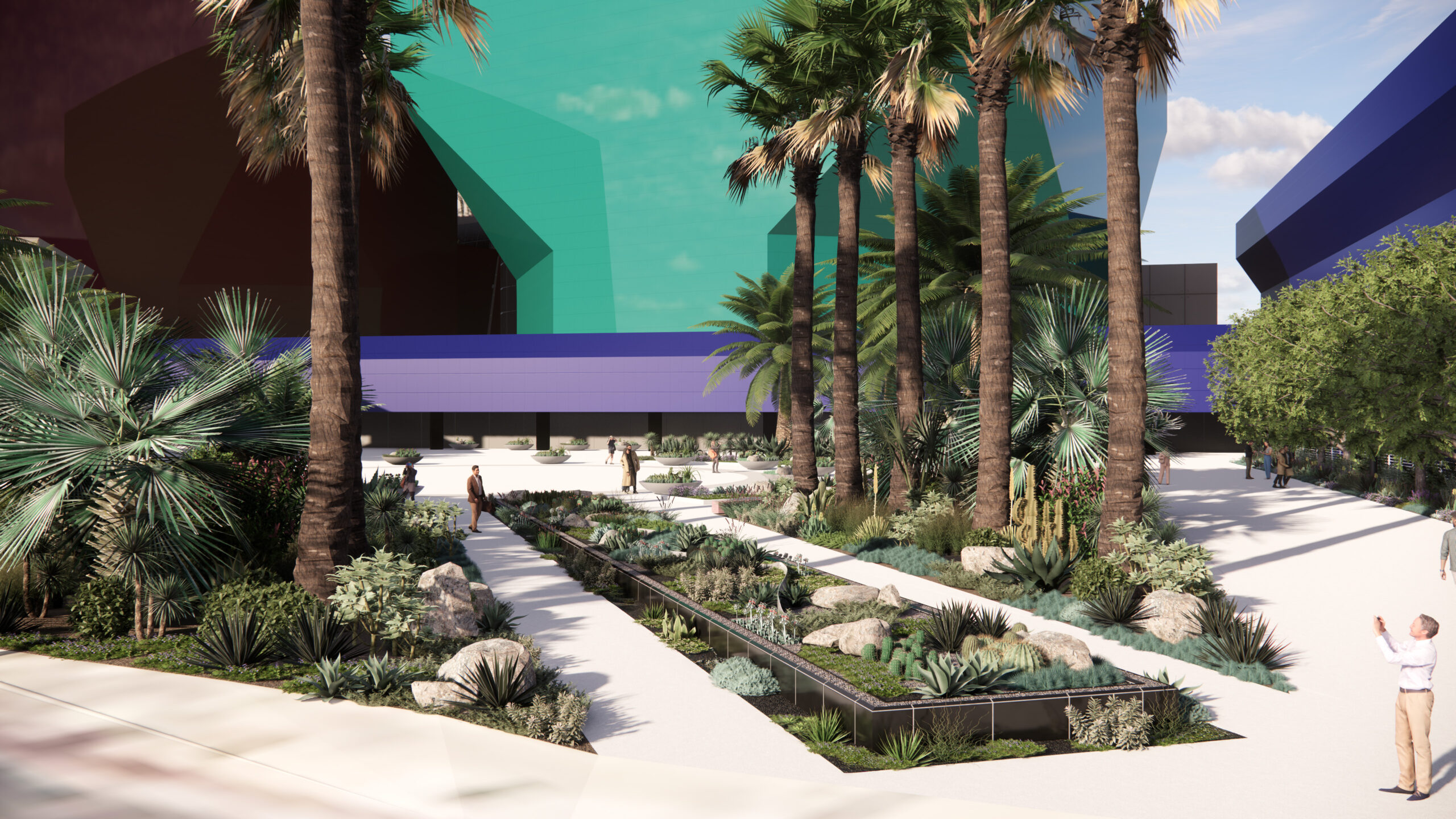
They’ll notice the absence of caution tape. The old fountain, once dry and dormant, will be transformed into something alive — a living planter rooted in color and movement. They may notice the way the space feels different. A little more calm. A little more alive. Hummingbirds flickering through sage. Dragonflies drifting through the afternoon light. A few more birds, bees, textures — and maybe, even if just for a moment, a quiet invitation to pause. The goal wasn’t to impress, but to create belonging. To make beauty accessible. To let nature offer what it always does — inspiration, balance, and a gentle reminder that regeneration begins with small, consistent choices. Even in the heart of a city.
As the climate continues to shift — with intensifying heat, unpredictable winds, and heavier rains across Southern California and beyond — we designed with these realities in mind. Every decision was made to respond to current and future ecological conditions with care and creativity. We selected plants that not only tolerate but thrive in full sun, heat, and drought. Many are California natives or climate-adapted species that regenerate soil, build underground resilience, and foster relationships with birds, pollinators, and beneficial insects — forming a living system rather than a static composition.
Our palette blends bold, sculptural specimens that bring contrast and color with low-water, pollinator-friendly choices that anchor the design ecologically. We aimed for beauty that functions — not just visually, but in support of biodiversity and soil health. As holistic designers, we see climate not as a constraint, but as a design collaborator. We lean into its rhythms to create landscapes that are viable, resilient, and regenerative — built to endure, adapt, and inspire over time.
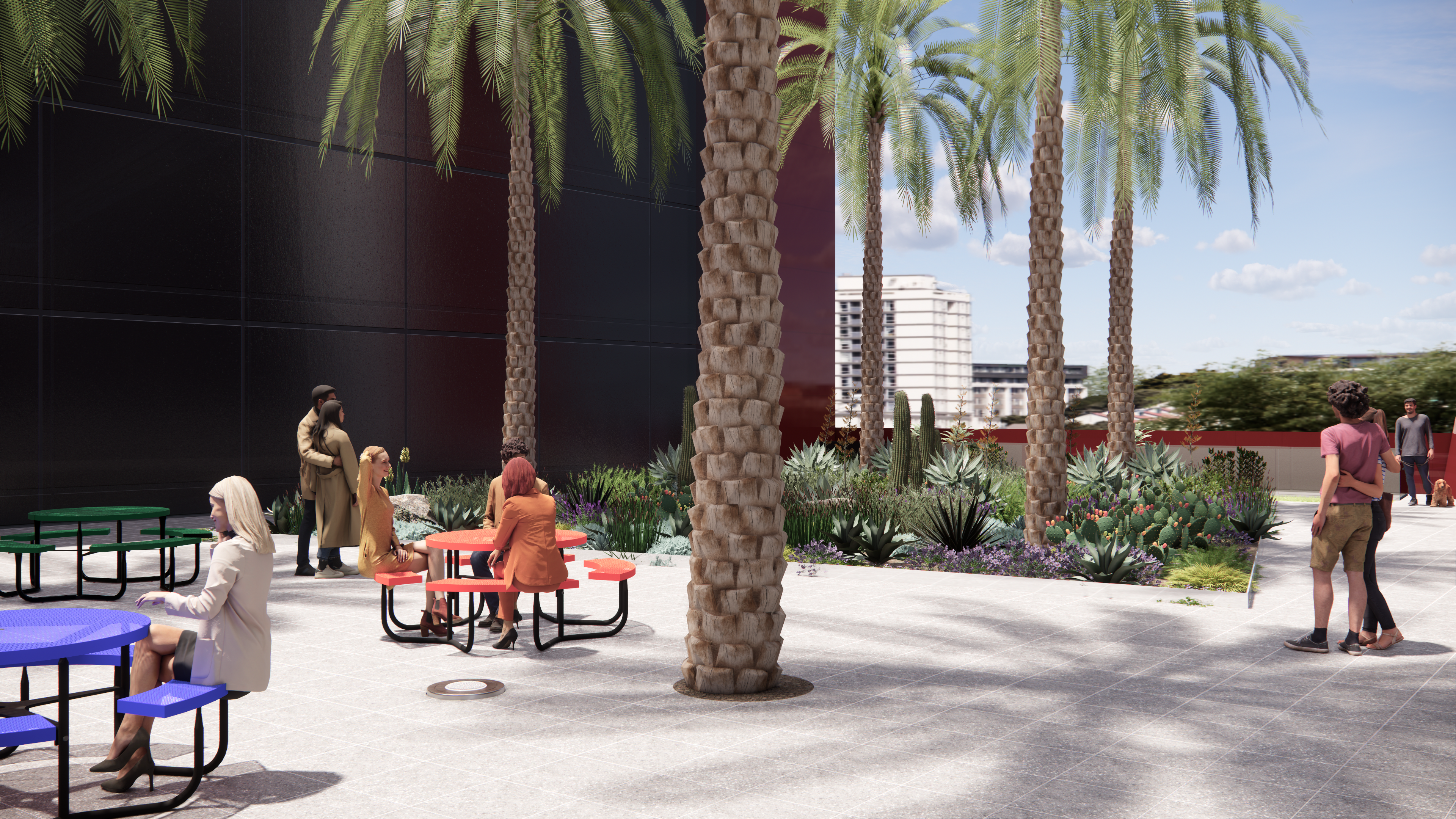
Our landscape designs are crafted to connect people — to each other, to beauty, and to nature. At the Pacific Design Center, we’ve shaped each courtyard with intention, using color, texture, and plant form to draw visitors into moments of reflection, inspiration, and calm. In the Fountain Courtyard, the transformation softens the space and brings it to life. Plants frame the amphitheater seating and edge the lawn, while the former fountain now serves as a lush focal point — a sculptural living planter that invites people to sit, eat lunch, or simply enjoy a quiet moment.
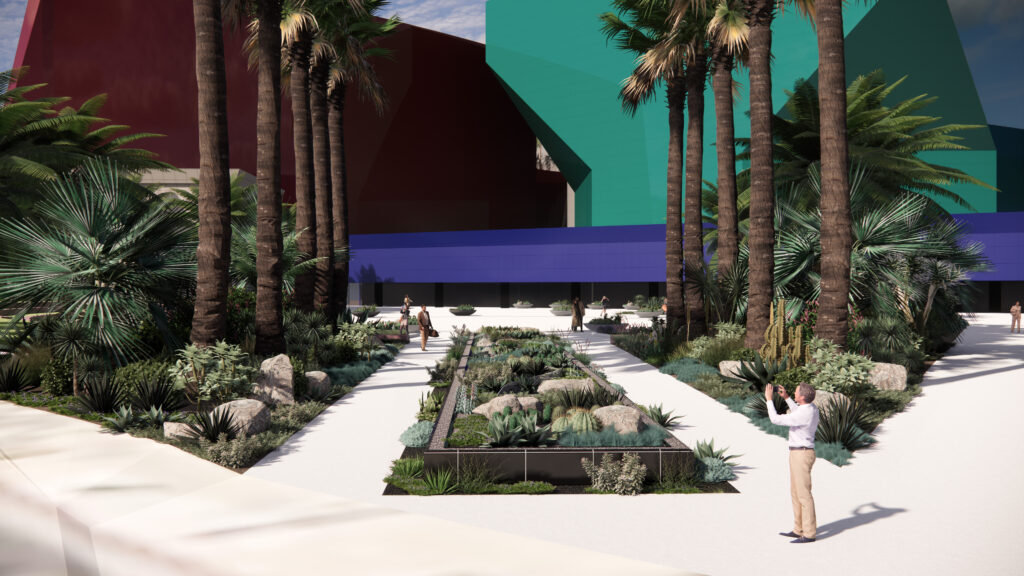
The space is designed to feel welcoming and intentional, offering a balance of structure and softness. In the Palm Court, the layered planting brings movement, contrast, and seasonal rhythm — creating an evolving garden experience that complements the architecture while inviting tenants and visitors alike to pause, gather, or pass through with a renewed sense of connection.
In 2023, I had the tremendous honor of being nominated as a Star of Design by the Pacific Design Center for landscape architecture, in a category that included my most esteemed peers and a history of luminaries. When I first moved to Los Angeles in 2005, I lived just down the road, and the red, green, and blue architecture of the Design Center became a landmark memory of a time when the seeds of my career were just beginning to take root.
To now be invited to design the gardens for these state-of-the-art buildings—structures embedded in the heart of Los Angeles, my chosen home, the city where my daughter was born, and the place that has supported the growth of my company and dreams—is an honor beyond words. Nearly 25 years ago, I knew only that I wanted to create life-sized living artworks with plants—translating landscapes into story and experience, forging poetry in the form of oases that nurture habitat, beauty, and deep connection between people and nature. This opportunity brings that vision to life at an iconic scale, in dialogue with a community of artists and peers who inspire me to reach beyond myself. Like a tree, this work is about thinking and growing beyond oneself to support the whole. My career has been shaped by questions of how we build from small, repeatable patterns, how we cultivate relationship—with ourselves, each other, and our environment—and how design can be a form of resilience.
In the wake of wildfires, climate change, and social tumult, it feels urgent and alive to demonstrate how landscape architecture can be simultaneously ecological, artistic, and deeply human. Through the integration of color, contrast, scale, and form, these gardens will not only accentuate the Pacific Design Center’s sublime architecture but also serve as a botanical narrative—illuminating plants by name, function, and relationship, while weaving us back into the ecological processes of which we are a part. My hope is that this project contributes to the health, resilience, and beauty of Los Angeles, offering both sanctuary and inspiration to the design community and to all who visit.