
menu
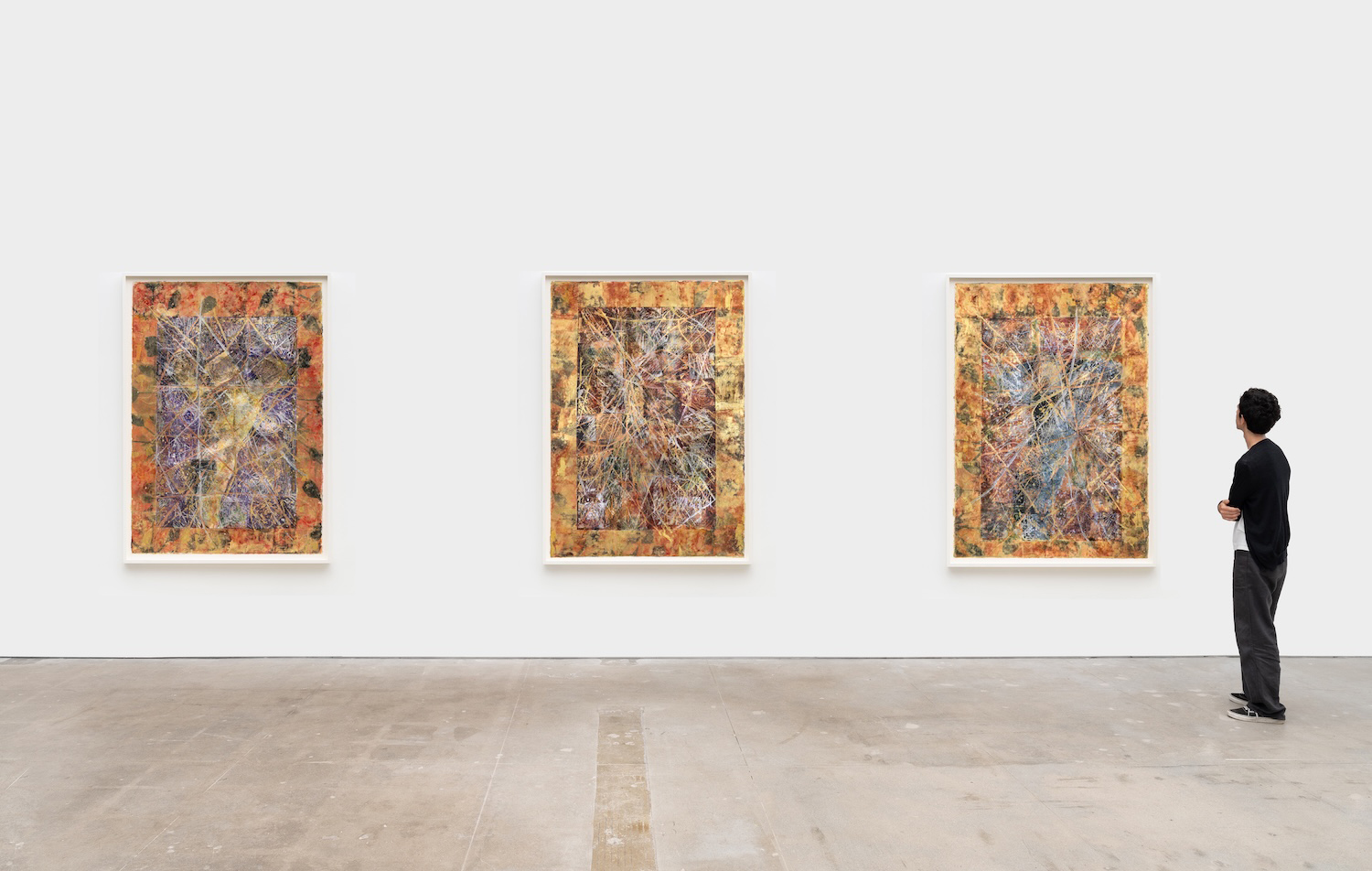
Portrait of the Artist as a Young Coyote by Harry Fonseca
Show More arrow
About the Show
On View April 11 - July 3, 2026

April 11 - July 3, 2026

Opening Reception: April 11, 6-8pm
PDC Design Galleries
750 N San Vicente, West Hollywood, CA

Gallery open Tuesday-Saturday from 12-5PM.

The PDC Design Gallery is pleased to announce Portrait of the Artist as a Young Coyote, an exhibition of paintings, works on paper, and prints by Harry Fonseca (1946-2006, Nisenan Maidu/ Portuguese/ Hawaiian). Widely considered one of the most prominent Native artists from California, Fonseca is recognized by his use of his distinct representation of his Coyote figure. Alongside the exhibition is Sedej Tuulémisé (Blood Relations), an exhibition of paintings by emerging artist Deerstine Suehead (Nisenan/Maidu/Seneca). Born fifty years apart, these artists draw from their Nisenan heritage and recontextualize traditional imagery within contemporary settings. The exhibitions will be on view from April 11th through July 3rd, 2026 at The Pacific Design Center Design Gallery on the PDC Campus at 700 N. San Vicente Blvd. in West Hollywood.

Harry Fonseca (1946-2005, Sacramento, CA) was an enrolled member of the Shingle Springs Band of Miwok Indians. This exhibition will chart the evolution of Harry Fonseca’s alter-ego, the Trickster Coyote, in over 30 paintings, prints and works on paper, many of which are being shown in California for the first time.

In the mid-1970s, Fonseca began portraying Coyote, a central figure in the traditional Native American dances in Northern California. From 1847, these dances were made illegal under Federal legislation– it was only until 1978 that Native Americans would receive protections under the American Indian Religious Freedom Act. Later, Fonseca began rendering Coyote in more contemporary settings—as an artist in New York City, or dressed in leather jacket, jeans, and sneakers in the Mission District in San Francisco.

Fonseca wrote, “All right, let’s go, Coyote, let’s go, let’s do a whole new mythology. Let’s bring you up from the past and bring you up to date and let’s just do it!” “The older Maidu tribes-people looked at my paintings of Coyote and immediately they were delighted. They recognized Coyote for what he is… They are survivors who have clashed with contemporary society and have had to adapt. Just like Coyote.”

During much of Fonseca’s career, contemporary Native artists were largely excluded from contemporary art settings, so Fonseca often exhibited at natural history museums and adjacent exhibitions. Understanding this dynamic, Fonseca often represented Coyote as a great artist, sometimes wearing Jackson Pollock’s denim shirt or Van Gogh’s blue jacket. Fonseca noted, “I could make him do all kinds of things that I wouldn’t have him do if MY face were up there.”

In 1981 Harry Fonseca developed Rose, a female Coyote. Although not present in traditional stories of Coyote, Harry Fonseca modeled Rose, “modern hip, brassy, singing, dancing trickster star of her own show,” after the female women of his Tribe, who showed resilience and adaptability in the face of genocide against the Indigenous people of California.

In many works in this exhibition, Fonseca inserted Coyote into stories of the traditional Western artistic canon, like the ballet “Swan Lake,” and operas “Aida" and "La Bohème." However, Fonseca refused depict the endings of these famous stories as tragedies. Fonseca said, “As soon as you’re born, you’re up against a wall. But it’s what you do when faced with obstacles that matters…The thing is, [Coyote and Rose] didn’t kill themselves and they weren’t overcome by evil. Even though they are aware of those evil elements in themselves, they didn’t let outside forces take advantage of them.”

Curator Margaret Archuleta wrote, “No matter what, Coyote never really dies; he returns for his next adventure. This symbol of survival is what Fonseca has incorporated into his paintings. ‘Coyote is a survivor’. As a survivor Coyote speaks to the contemporary Indian with a promise of continuation, a continuation of cultural ideals and identity.”

Deerstine Suehead will present a series of acrylic paintings on canvas in her exhibition entitled Sedej Tuulémisé (Blood Relations). Suehead’s work “speaks to survival, grief, and the cycle of life. My works talk about how colonization has affected my Reservation and how the Gold Rush has affected my homeland. My art shows that the girl who grew up in a trailer, surrounded by illness from colonization and every type of violence, creates beauty from her own story of survival.” This exhibition at the PDC Design Galleries is Suehead’s first solo exhibition.

“My motivation for doing art is supported by my ancestors. Though the visions are my own, I channel messages from my lineage in dreams, both asleep and awake. I remind the observer that US soil belongs to First Nations, thousands of tribes that are all unique and sacred, individually, and collectively.”

Suehead portrays her family baskets, ceremonial spaces, and local wildlife. Deerstine is also a traditional tattoo practitioner, a role she upholds after it was lost for over a century in her family. In Ancestor, a sea otter, wearing a botsawi, a Ceremonial goose feather headpiece, and holding a beaded sash is surrounded thorns that represent protection. Through art and resiliency, Suehead reclaims this Native imagery, and combats the erasure California Native Americans have experienced.

In Ky·pe (2025), a woodpecker holds a locket of her great-great grandmother, Dearstine Starkey, a tribal Matriarch and Suehead’s namesake. Dearstine was a Nisenan woman and survivor of the California Gold Rush. Born in the northern California foothills, she was a weaver, quilter, and speaker of her Nisenan language. Highly respected within her community, she was well known for her weaving demonstrations at museums in northern California. “Gram Dearstine was full of love and life.”

Suehead writes, “Investing in yourself, whether on a piece of paper, a canvas, beadwork, or weaving is a form of opposition to oppression. I bring forth visions forth of transcendence, from victimhood to uprising, acknowledging that every one of our victories makes First Nations people stronger.”

Harry Fonseca (Nisenan/Maidu/Portuguese/Hawaiian, 1946-2006) was born and raised in Sacramento and was an enrolled citizen of the Shingle Springs Band of Miwok Indians. He was influenced by the Maidu origin stories told to him by Henry Azbill. In 1990, he moved to Santa Fe, where he lived until his death in 2006. His retrospective Harry Fonseca: Coyote, A Myth in the Making, curated by Margaret Archuleta, traveled across the United States (1988-1989) including the Museum of Natural History, Los Angeles, Smithsonian Institution, Washington, D.C, Joslyn Art Museum, and Oakland Museum of California, amongst others. In 1999 he was a featured artist in Ceremonial at the Venice Biennale curated by the Native American Arts Alliance. Most recently, his work was a part of the exhibition Olé Ham Nees: We Call Him Coyote: Harry Fonseca; Works from the Shingle Springs Band Collection at the Gorman Museum of Native American Art. His work can be found in the permanent collections of San Francisco Museum of Modern Art, National Museum of the American Indian, Smithsonian, Washington, D.C., Crystal Bridges Museum of American Art, Denver Art Museum, Hood Museum, Detroit Institute of Art, Virginia Museum of Museum of Fine Art, Cantor Arts Center, the Eiteljorg, Heard Museum, the Autry Museum of the American West, amongst many others.

Deerstine Suehead (b.1996, Nevada City, CA) (Nisenan/Maidu/Seneca) lives and works in Sacramento, CA. Suehead is a self-taught artist. In addition to being a visual artist, Suehead is a traditional tattoo practitioner. She is the founder of Póombokom Tuulémɨsé, a cultural collective that supports, enhances and protects the continuity of regional Tribal material culture via intergenerational learning and the transference of cultural protocol and norms. She has exhibited widely in California, including such exhibitions as Momím Wené | Medicine Water (2024-2026) at the Grace Hudson Museum, Ukiah, CA which traveled to the Harris Center for the Arts, Folsom Lake College, Folsom, CA, the Lólmen Gallery, Shingle Springs Rancheria, Shingle Springs, CA, the Maidu Museum & Historic Site, Roseville, CA, the Mendocino Art Center, Mendocino, CA ; Walking in our Moccs: Perspectives from Indigenous Artists (2025-2026) at the Maidu Museum & Historic Site, Roseville, CA, and In the Meadow: Contemporary Central California Native Art +Design, (2025-2026) at Switchboard Gallery, Placerville, CA, which traveled to Lólmen Gallery, Shingle Springs Rancheria, Shingle Springs, CA. Suehead’s work is in the permanent collections of the Shingle Springs Band of Miwok Indians, as well as the Folsom Lake College, Folsom, CA.

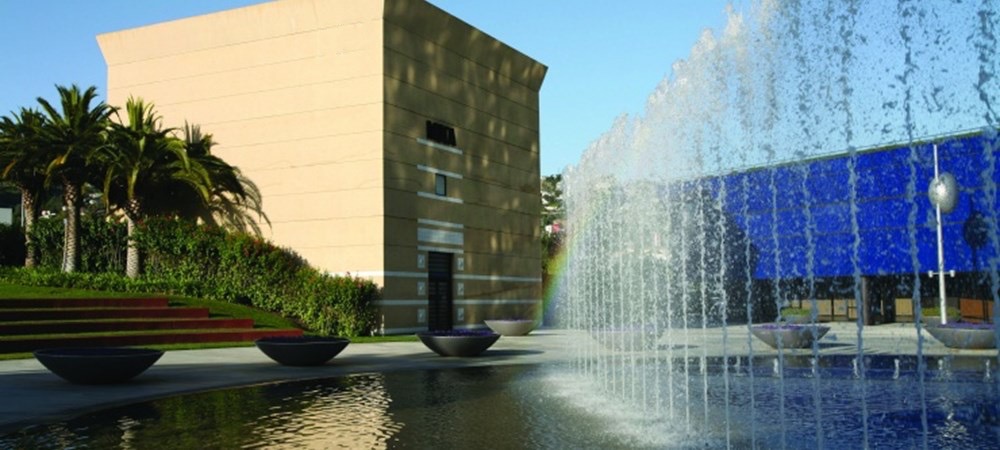
The PDC Design Gallery is a two-level museum-quality exhibition space with 2,780 square feet (258 square meters) located in the freestanding building in the Pacific Design Center Plaza, (PDC) West Hollywood that was formerly occupied by MOCA (Museum of Contemporary Art) for twenty years. Led by Milan-based curator Helen Varola, the gallery re-opened in March 2022 with its mission to explore design as an extension of artistic practice. Programming is devoted to contemporary art and design engaging internationally renowned artists, designers, curators, and leading academic institutions to draw upon the collective intelligence and creativity of design culture. The parking structure for the Pacific Design Center Gallery has entrances on both San Vicente and Melrose. PDC parking validation is offered to the press by calling one day in advance.
The Pacific Design Center recognizes that it is on the ancestral, and unceded homelands of the Gabrieleño Tongva and Gabrieleño Kizh. We pay our respects to the Tongva and Kizh ancestors, elders, and relatives past, present, and future. We recognize the Tongva and Kizh peoples who are still here, and we commit ourselves to honoring their stories and culture.

Harry Fonseca: Portrait of the Artist as a Young Coyote is dedicated to Sue Fonseca (1946–2025), tireless supporter and champion of Harry Fonseca’s career. Her unwavering belief and devotion helped bring his work to wider audiences and sustain his legacy. We honor her with gratitude, recognizing the enduring impact of her dedication.

Show More arrow
Special Event: Opening Reception & Press Preview
Show More arrow
Saturday, April 11 2026 from 6:00-8:00 PM
Join Us!

Show More arrow
PDC Design Gallery Hours
Show More arrow
Open Tuesday-Saturday
PDC Design Gallery Hours

Tuesday-Saturday from 12-5PM.


Show More arrow
Directions + Parking
Show More arrow
How to get to the PDC
PDC Design Gallery Directions + Parking
Show More arrow
About the PDC Design Gallery
Show More arrow
Cultural Destination
Learn more about the Gallery

The Pacific Design Center Design Gallery is an exhibition space located in the former MOCA building on the PDC campus. PDC Design Gallery is devoted to art and design, engaging internationally renowned artists, celebrated designers, noted curators, professional design organizations and leading academic institutions to draw upon the collective intelligence and creativity of California’s vast design culture, as well as international design invention and innovation.
Show More arrow
Contact Us
For further information about the PDC Design Gallery, or to be invited to submit an exhibition proposal, please contact Curatorial Advisor Helen Varola at helenvarola@gmail.com or visit www.helenvarola.com.